Thoughts on Where the Action Is
I my thoughts on Where the Action Is: The Meetings That Make or Break Your Organization by J. Elise Keith.📚
I’ve enjoyed reading this book, although it got repetitive towards the end. The book contains an extensive section about meeting theory and research. And I’ve learned a lot of things about meetings. The first thing is that you should not call them meetings at all. So the author then also proposes to delete all “meetings” in your calendar. Use specific terms depending on the appointment type, like “one-on-one” and “strategy workshop.”
Each “meeting” has a specific role it should achieve. It should give business value, and it also provides human value. These are important, and I’ve never thought about this distinction. But I have certainly attended many meetings where the business value was unclear. A meeting without any business value is a waste of time and leads to a discussion where you wonder what you are doing there.
I’ve enjoyed reading the book’s first half a lot more than the second part. In the second part, the author list and explains the 16 different meeting types and how you can use them.
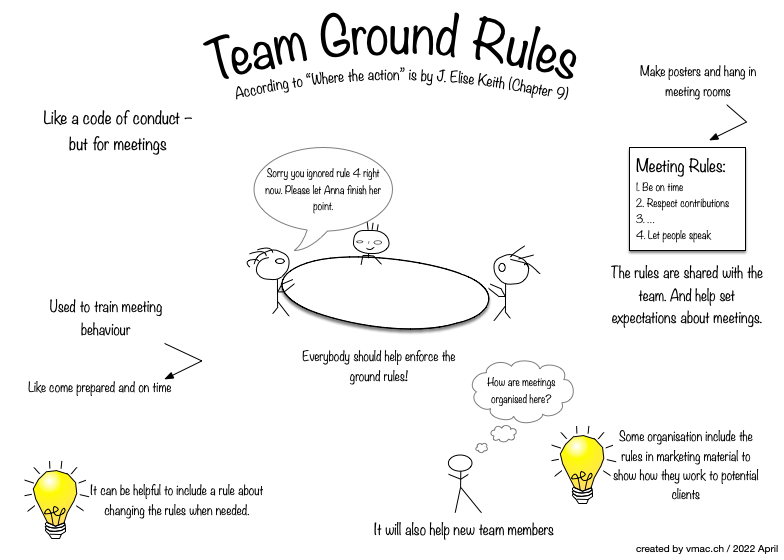
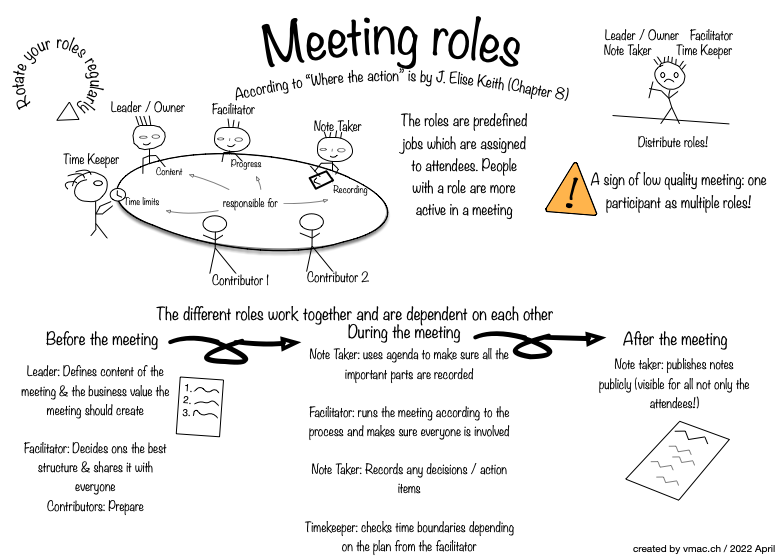
I was surprised by how much research there is about how meetings work and what is essential. One other highlight was the discussion of meeting roles and the “team ground rules.” The ground rules can help get better quality meetings as it codifies how a team (or organization) wants to conduct its meetings. And it is also pretty simple to execute. Whereas the meeting roles discuss the different tasks you need to handle for a successful meeting, it is best to distribute them to all the participants so you have more engagement in the conference.
The last important theme of the book was about the meeting performance maturity model. I’ve enjoyed reading about this and the different levels. The MPMM is a model to grade how meetings are conducted within an organization. Starting at level 1, where you have no systems for meetings, and each meeting owner does what she wants, up to level 5, the world-class level of sessions.
The higher the level, the more structure you have for meetings. On the higher levels, it can also mean that you have people within the organization to facilitate sessions. But you can start low and, with minor changes, already achieve improvements, especially by beginning to use tools like the ground-rules and meeting roles.
At first glance, a book about meetings does not sound like a book you want to read. We all need to conduct meetings at some point in our careers, and most of us have never gotten a formal education on how to do this. So learning some theories about this topic is not wrong, and I enjoyed reading this book.
Comments
How to respond
Write your comment on your on page and link it to this page with the following link:
https://vmac.ch/posts/2022-04-16-where-the-action-is-review/
Then insert the permalink to your post into the form below and submit it.
Alternatively you can reach me by email to: comment@vmac.ch